What happens when everything is perfect?
A short reflection on making things in the age of AI
30 January 2026 · 2 minThe other day I was reading Thus Spoke Zarathustra, and I stopped at this line:
That everyone has the right to learn to read corrupts in the long run not only writing but also thinking itself.
Nietzsche saw something early on. When a skill becomes universal, the craft behind it often erodes. Not the result, but the way. The relationship between effort and mastery starts to weaken.
It made me think about AI.
With AI, everything becomes more accessible. When you write a message or a letter to someone you love, or when you build an app or make a film, speed increases. But something important slips away: the bond between the creator and their creation.
That struggle between wanting to create and actually creating used to be important. It was part of learning. Part of ownership. You struggled, failed, tried again, and through that process, the idea became yours. When creation becomes instant and disposable, what remains of that bond? What does it even mean to make something anymore?
And that is where the real risk appears.
Not that machines will replace us, but that we will start creating without care. That we will outsource not only execution, but intention. That we will become operators of tools rather than participants in the act of making. Everything polished. Everything correct. The room felt empty, lacking any signs of life.
Yet this loss carries its own answer.
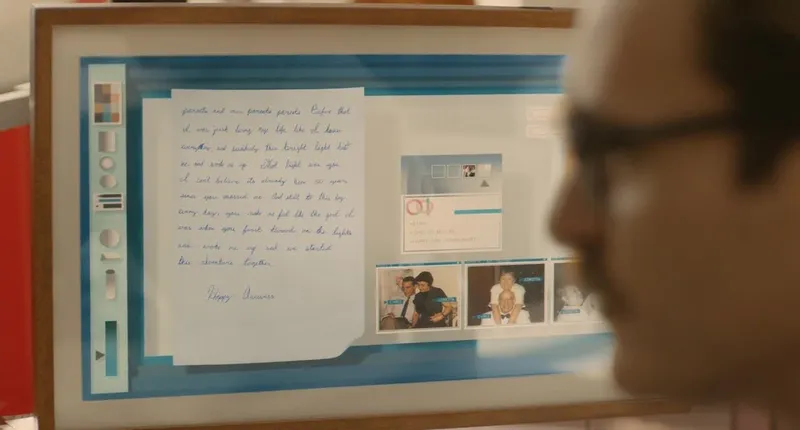
In the film Her, most communication happens through AI. Still, Theodore’s job is to write letters by hand for other people. Why would anyone pay for that when a machine can do it faster and better?
In a world focused on efficiency, people start to crave the opposite. They want the imperfect, the human touch, and the sense that someone real is present.
That is the line I hope we do not cross.
The need for the human. The imperfect. The crafted. Not because it is more efficient, but because without it, we risk forgetting what matters at all.